What Size Storage Unit Do I Actually Need
You are standing in the garage, trying to guess how many boxes, bikes and old furniture pieces will actually fit into a storage unit.
Every size sounds either too small or wildly oversized. Book a unit that is too tight and you will be back at the counter within a month, working out where the overflow goes.
Book one that is too generous and you are quietly paying for empty floor space every single week.
Getting the size right the first time is less about guesswork than it looks, once you know how what size storage unit you need is actually worked out.
Why Guessing Your Storage Size Almost Always Goes Wrong
People tend to size a storage unit the way they size a suitcase, by eye, and it rarely goes well.
Rooms feel bigger than they are once the furniture is broken down and stacked. A lounge room that looks like it needs a large unit often condenses into something much smaller once couches are on their sides and boxes are stacked close to the ceiling.
The opposite mistake is just as common. People underestimate how much floor space boxes take up once they cannot be stacked higher than shoulder height, and end up needing a bigger unit than expected.
There is also a cost to guessing wrong in either direction. Downsizing to a smaller unit later usually means shuffling everything you have already packed, while upsizing mid-lease can mean paying two rates while you move between units. A few minutes spent measuring properly upfront avoids both.
The Storage Unit Size Ranges You Will Actually Choose Between
Most facilities group their storage unit sizes into a handful of practical bands rather than offering every dimension imaginable.
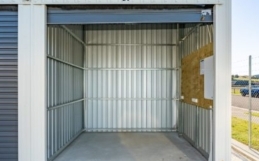
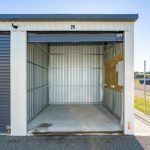
- small lockers, roughly 1 to 3 square metres, suited to boxes, seasonal items or a few pieces of furniture
- one to two bedroom units, roughly 3 to 6 square metres, enough for a compact household on the move
- three to four bedroom units, roughly 9 to 15 square metres, built for a full house move or a garage clear-out
- oversized and vehicle bays, sized individually for cars, trailers, caravans or work vehicles
According to the Self Storage Association of Australasia’s most recent industry snapshot, the roughly 730,000 units operating nationally average a little over 10 square metres of net storage area each, which lines up neatly with a typical one to two bedroom household’s worth of belongings.
Matching The Size To What Is Actually Happening In Your Life
The easiest way to size a unit is to match it to the reason you need one, rather than chasing a square metre number on its own.
Moving house calls for a size based on your current home’s bedroom count, not the new one. If the government’s moving home checklist is already on your to-do list alongside updating your licence and enrolment details, storage sizing is worth sorting at the same time, before moving day, not after.
Renovating usually needs less space than people expect, since only the room being worked on has to be cleared, not the whole house.
Decluttering or downsizing is the hardest to size by feel, because the goal is often to store less than you think and let go of more than you planned. A smaller unit with a firm limit can be a useful forcing function here.
Business and trade storage tends to be driven by stock volume or tool inventory rather than square metres, which is why flexible sizing matters more for commercial use than for a one off house move.
Seasonal storage is its own category again. Christmas decorations, camping gear, or off-season sports equipment rarely need more than a small locker, and paying for a full unit year round for a few boxes that only come out twice a year is one of the more common ways people overspend on storage.
What Size Do You Need To Store A Car, Caravan Or Trailer
Vehicle storage is where size questions get specific fast, and generic advice stops being useful.
A standard sedan or small hatchback fits comfortably in a single car bay, but anything larger, a dual cab ute, a caravan, or a boat on a trailer, needs its exact length and width measured before you book, not estimated. Getting this wrong by even half a metre is the difference between a vehicle that fits and one that does not.
Drive-up access matters as much as the bay size for vehicles. Being able to reverse a trailer straight in, rather than manoeuvre it through a narrow internal corridor, changes what size bay is actually workable in practice.
Clearance height is the other measurement people forget. A caravan or a boat on a high trailer can clear a doorway by a few centimetres or not at all, so check the internal clearance of the bay itself, not just its floor dimensions, before you commit to a booking.
Why Amberley Self Storage Makes Sizing Simple
Amberley Self Storage carries more than 15 unit sizes across its Amberley and Raceview facilities, from small lockers through to bays built specifically for cars, caravans, trailers and horse floats.
Rather than guessing, a free online space calculator lets you enter what you are storing and get a straight recommendation on size before you book anything. Vehicle storage comes with a guaranteed lowest price in the area, and every move-in includes free trailer hire, so getting your things to the right size unit does not cost extra either.
Find Your Exact Size In Two Minutes
Guessing a storage size costs you either wasted space or a second trip to upsize later. Neither is necessary.
Run your list of items through Amberley’s Space Calculator for an instant size recommendation, or get in touch with the team at Amberley or Raceview and describe what you are storing. They will tell you straight which size actually fits.
Frequently Asked Questions About Storage Unit Sizes
What size storage unit do I need for a one bedroom unit?
A one bedroom household typically fits in a unit of around 3 to 6 square metres, though this depends on how much furniture you are keeping versus selling or donating. For context, the national average across Australian storage facilities sits at just over 10 square metres.
What size storage unit do I need for a car?
A standard car fits a single vehicle bay, but exact dimensions vary by vehicle, so measure length and width before booking rather than assuming a standard size will fit.
How much fits in a small storage locker?
A small locker, typically 1 to 3 square metres, generally holds several boxes, small furniture pieces, or seasonal items like camping and sporting gear.
Is it better to size up or size down when unsure?
Sizing up slightly is usually the safer call, since a second visit to swap for a smaller unit is easier than realising midway through moving day that nothing else fits.
Do storage units come in custom sizes for vehicles?
Many facilities, including Amberley Self Storage, offer bays sized specifically for caravans, trailers, boats and larger vehicles rather than a single generic vehicle size.